
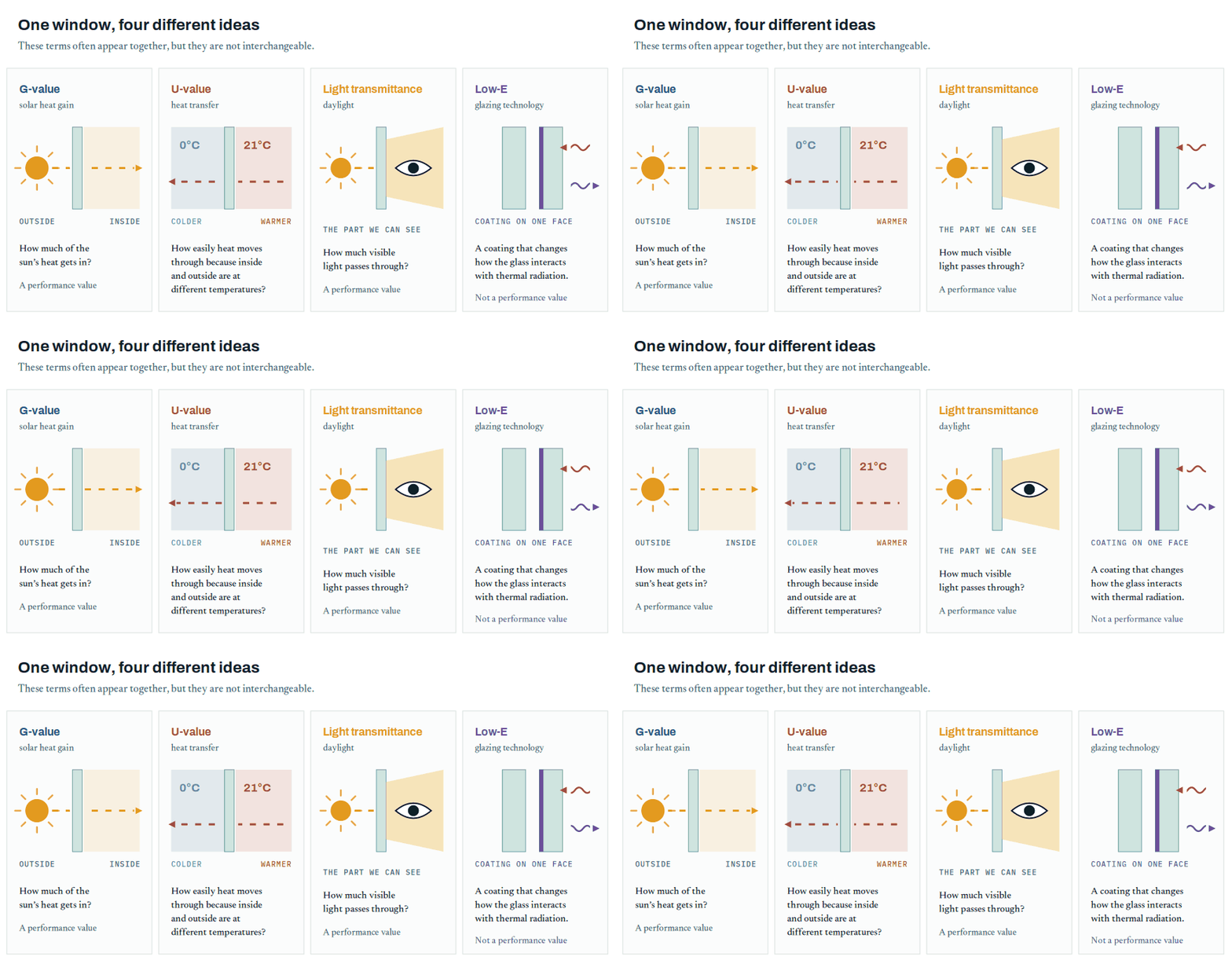
Window specifications often put several terms side by side: G-value, U-value, light transmittance and Low-E. They are related, but they do not mean the same thing. The easiest way to understand them is to ask what question each one answers.
| Term | What it tells you |
|---|---|
| G-value | How much solar energy gets through the glazing and ends up inside. |
| U-value | How easily heat transfers through the window when the two sides are at different temperatures. |
| Light transmittance | How much visible light passes through the glazing. |
| Low-E | A glazing technology or coating that changes how the glass interacts with thermal radiation. |
G-value is about solar gain
G-value describes the solar energy that enters through the glazing. If two windows receive the same sunlight, the one with the higher G-value allows more solar energy to end up inside.
This is why G-value matters in overheating and cooling calculations. It can also matter in winter, when solar gain may reduce heating demand.
U-value is about heat transfer
U-value answers a different question. It tells you how easily heat transfers through the window because there is a temperature difference between indoors and outdoors.
Imagine a cold winter night. The room is warm, the outside air is cold and there is no sunlight. Heat will tend to move from the warmer side towards the colder side. U-value describes how readily that happens through the window construction.
This means a window can have a relatively low U-value while still having a comparatively high G-value. One value does not replace the other.
What about light transmittance?
Light transmittance tells you how much visible light passes through the glazing. That is not the same as solar heat gain.
Sunlight carries energy across a range of wavelengths. Our eyes only see part of it. This is why a glazing product can be designed to reduce solar gain without simply making the room dark.
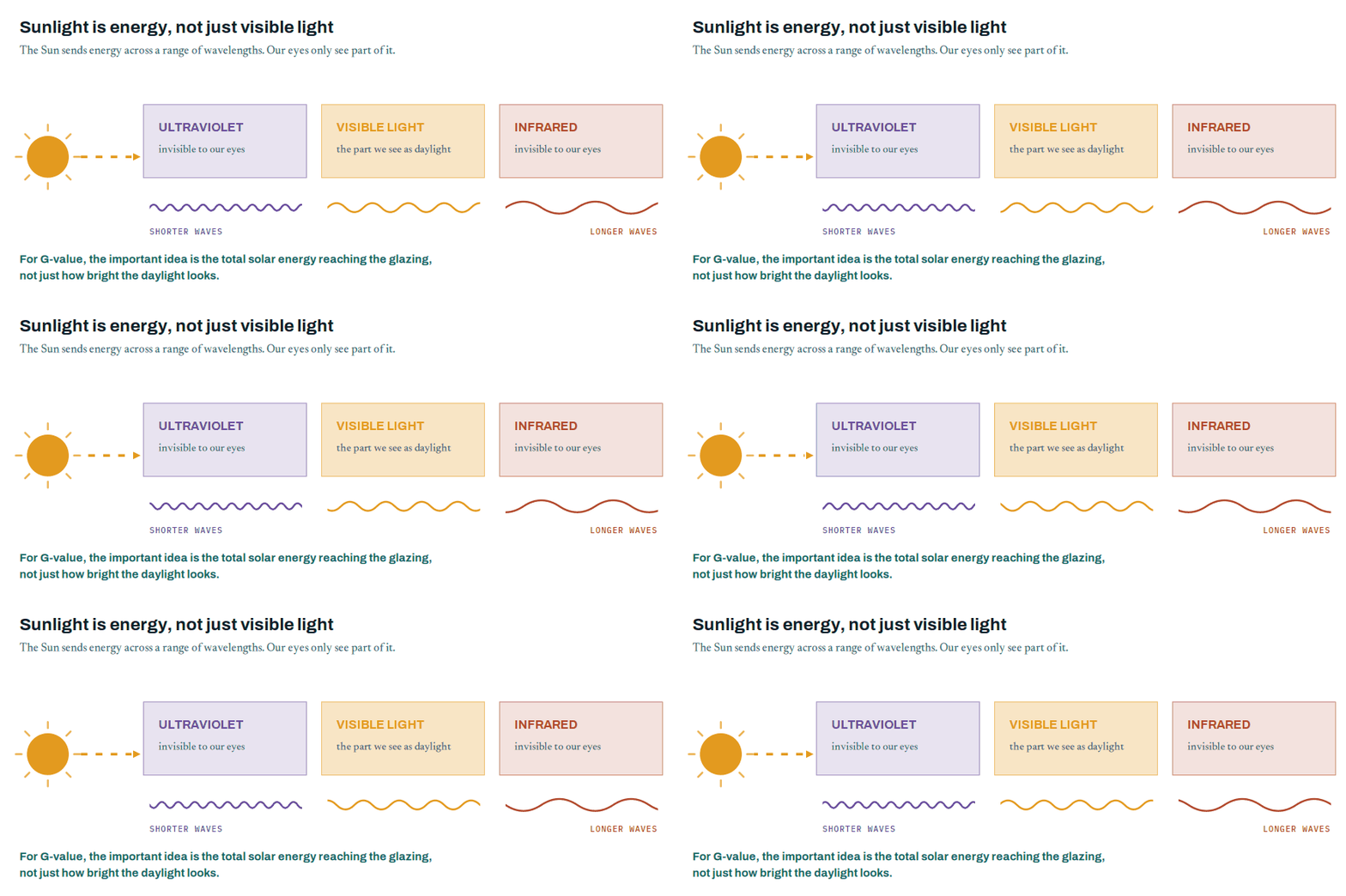
A low G-value therefore does not automatically mean dark or heavily tinted glass. Modern solar-control glazing can reduce solar gain while still allowing useful daylight into the room.
Where does Low-E fit in?
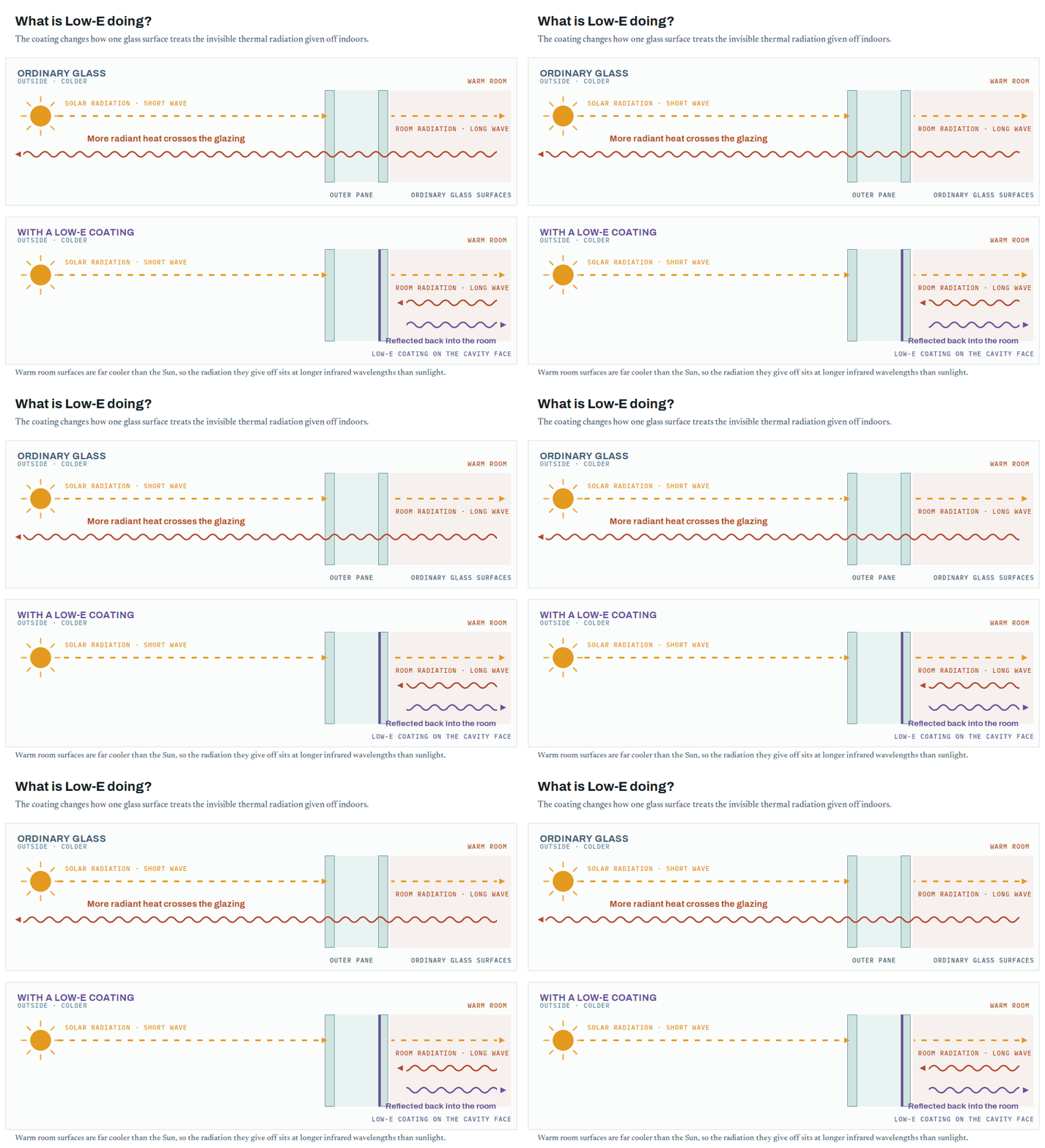
Low-E means low emissivity. It is not a performance value like G-value or U-value. It refers to a thin engineered coating applied to a glass surface.
Warm surfaces inside a room give off invisible thermal radiation. A Low-E coating changes how the glass interacts with that radiation and can reduce the radiative part of heat transfer across the glazing. This is why Low-E coatings are strongly associated with improved U-values.
The coating can also influence solar transmission, so it may affect G-value too. But “Low-E” and “low G-value” are not two ways of saying the same thing.
Why two similar-looking windows can perform differently
The appearance of a glazing product does not tell you everything about its thermal or solar performance. Different glass types, pane arrangements, coatings, tints and laminates can change how much energy is transmitted, reflected or absorbed.
Two windows may therefore look very similar while having different G-values, U-values and light transmittance figures.
A simple way to remember the four terms
- G-value: solar heat coming in
- U-value: heat transferring through because one side is warmer than the other
- Light transmittance: visible daylight passing through
- Low-E: a coating technology that changes radiative heat transfer
Related guides
What Does the G-value of a Window Mean?
What G-value Should I Use for My Windows?
Sources and further reading
The following sources are useful if you want to go further into the technical and practitioner detail.